

Burning or gritty eyes can wear you down fast. Vision that comes and goes can make screens, reading, and driving feel harder than they should. And if your eyes water but still feel dry, it is easy to assume it is allergies or “just contacts.”
At Advanced Eyecare Associates, we help patients in Moses Lake, Washington connect the dots between symptoms and the real cause. Many cases are not about making fewer tears. They are about tears that evaporate too fast, which is why drops can feel like a short break instead of a real solution.
Why Dry Eye Can Feel Worse Later in the Day
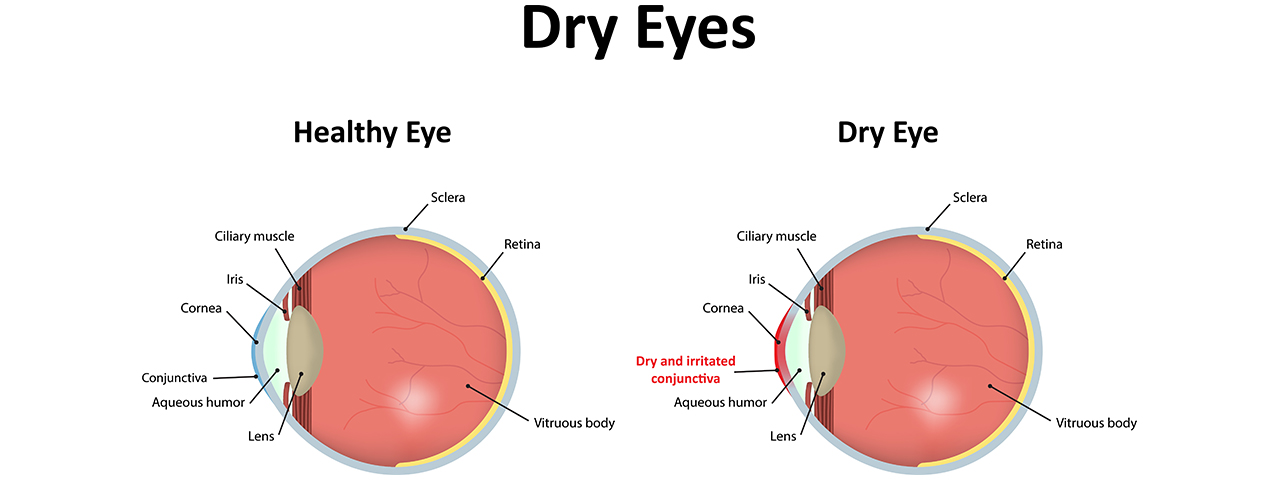
Dry eye often builds as your day goes on. Screen time can lower your blink rate, and that can leave the surface of the eye exposed longer than it should be. Add dry indoor air or wind, and symptoms can ramp up quickly.
Watery eyes are especially misunderstood. When the surface of your eye gets irritated, your eyes can overproduce watery tears as a reflex. Those watery tears do not always stay stable long enough to calm irritation, so you can end up feeling watery and dry at the same time.

Symptoms That Point to Dry Eye
Dry eye symptoms can be easy to mislabel as allergies, fatigue, or contact lens issues. If symptoms keep coming back, it is worth paying attention to patterns. Common dry eye symptoms include the following.
- Burning, stinging, or a gritty feeling
- Redness that comes and goes
- Blurry or fluctuating vision
- Excess watering
- Light sensitivity
- Discomfort in wind, heat, or air conditioning
- Contact lens discomfort that ramps up after a few hours
- Symptoms that worsen late in the day
The Common Root Cause We Look For: Meibomian Gland Dysfunction
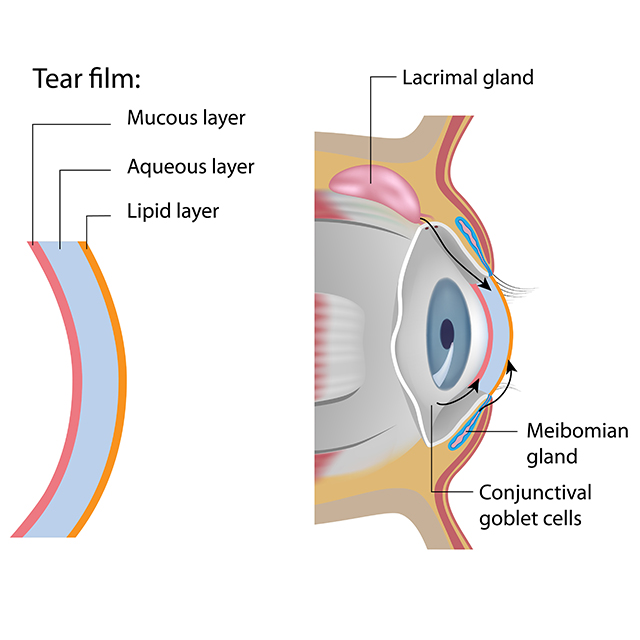
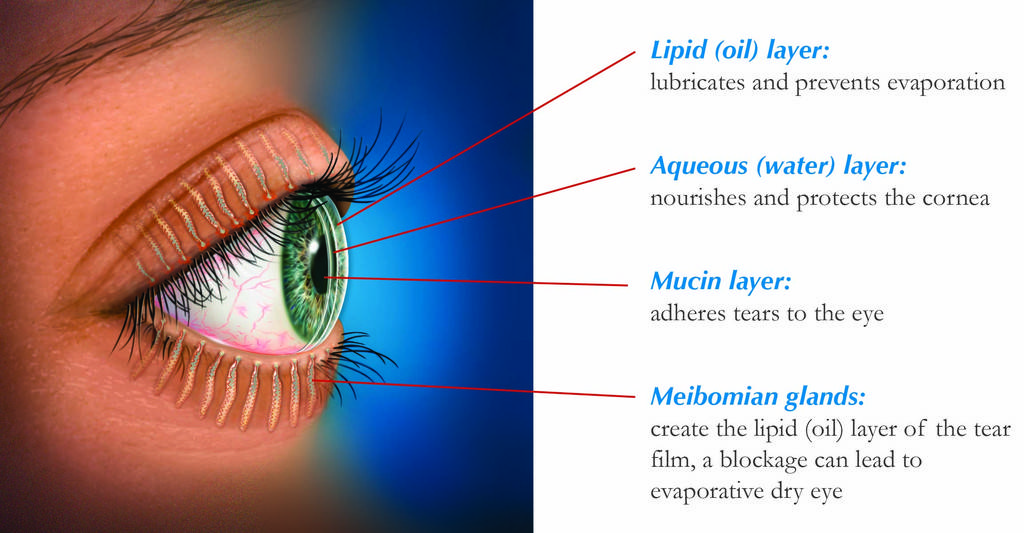
For many patients, dry eye is tied to evaporative dry eye. This happens when the oil layer of your tears is not doing its job, so tears evaporate too quickly. A leading reason is meibomian gland dysfunction (MGD), which involves blocked or unhealthy oil glands along the eyelids.
Those glands matter because they help your tears stay smooth and stable across the eye. When they are blocked or inflamed, the tear film can break up faster. That can lead to irritation, watery eyes, and vision that fluctuates through the day.


Why Drops Alone Are Not Always Enough
Over the counter drops can help temporarily, especially when dry indoor air or extended screen time is the main trigger. But if the underlying problem is gland blockage or eyelid inflammation, drops often do not address what is driving symptoms. That is when patients get stuck in a cycle of short term relief and frequent flare ups.
A targeted evaluation helps identify what type of dry eye you have. That information is what guides a plan that fits your symptoms and your daily life.
How Advanced Eyecare Associates Helps
Dry eye care at Advanced Eyecare Associates starts with a focused evaluation designed to answer the “why.” Your visit may include tear film testing and an assessment of the meibomian glands to check for signs of MGD and tear film instability. The goal is to understand what is driving your symptoms, so recommendations are specific, not generic.
Based on your results, your plan may include at home support and in office treatments. We also offer advanced options such as IPL for dry eye in Moses Lake, Washington and LipiFlow in Moses Lake, Washington, when appropriate for your diagnosis.

Daily Habits That Support Eye Comfort
Small changes can support a healthier tear film between visits. These habits are not a replacement for treatment when dry eye is persistent, but they can improve day to day comfort. They also help protect the progress you make with in office care.
- Take blink breaks during long screen sessions
- Point vents away from your face, especially in the car
- Use a humidifier in dry indoor spaces
- Follow contact lens wear and hygiene guidance
- Protect your eyes on windy days with wraparound sunglasses
If your eyes feel dry, gritty, watery, or your contacts are getting harder to wear, it is worth getting answers. Schedule a dry eye evaluation at Advanced Eyecare Associates in Moses Lake, Washington. We will identify what is most likely driving your symptoms and map out what may help long term.


